German Shepherd with Flower – A Designer’s Honest Review
When I first opened the German Shepherd with Flower design file, I was curious how a hand-drawn style would translate into a finished embroidery project. Hand-drawn lines often carry a looseness that can either feel charming or read as unfinished once stitched out. After testing this design on several substrates and product types, I can say it lands firmly on the charming side — but only if you approach it with the right expectations and preparation.
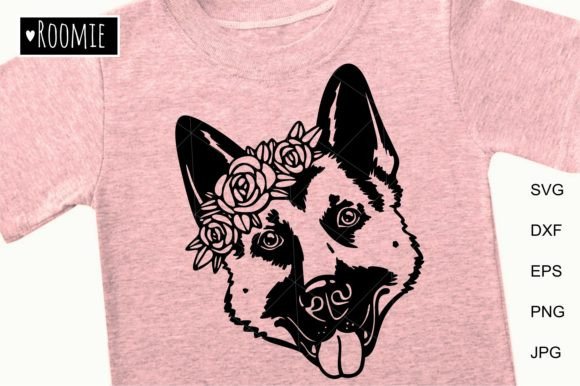
The mood here is soft, affectionate, and slightly whimsical. The flower adds a gentle focal point that softens the strong silhouette of the German Shepherd. This is not a hyper-realistic portrait or a heavily detailed showpiece. Instead, it feels like a warm sketch you might frame or stitch onto a gift for a devoted dog owner. The visual personality is approachable, which makes it naturally suited for personalized gifts, handmade products, and small shop merchandise where emotional connection matters more than technical dazzle.
First Impressions: Shape, Layout, and Detail Level
The design reads clearly from a distance. The German Shepherd profile is recognizable by the ear shape, muzzle, and neck line, and the flower sits near the snout or collar area depending on how you place it. The layout is compact enough that it works well on a tote bag design, a sweatshirt embroidery, or even a baby embroidery project if the recipient is a shepherd-loving parent.
Detail level is moderate. You get the essence of the breed without dense stitch counts that would bog down a small hoop or cause distortion on stretchy fabric. That said, the hand-drawn nature means some lines are thin and could lose definition if you scale the design down too aggressively. I recommend testing it at your intended size on scrap fabric before committing to a production run.
Real Project Use: Custom Embroidered Tote Bag for a Dog Lover
I prepared a custom tote bag for a client who wanted something for everyday errands — sturdy, washable, and clearly showing off her German Shepherd’s love for flowers. The German Shepherd with Flower design fit the brief perfectly. The tote was a medium-weight canvas in natural beige, which gave enough contrast for the thread colors to pop without clashing.
I used a medium hoop size — not the smallest, but certainly not the largest in my collection. The design centered well on the bag front, and the flower gave a natural finishing point that didn’t feel abrupt. My client later told me she received multiple compliments at the farmer’s market and even had someone ask if she sold the bags. That kind of reaction is exactly what you want when you’re building a craft business or Etsy seller inventory.
If you are considering this design for a tote bag design, apron, or pillow cover, I suggest using a medium-weight stabilizer and a thread color that contrasts well with the base fabric. The hand-drawn style works best when the lines are distinct and not competing with a busy background.
Where the Design Performs Best
Through multiple test stitches, I found the German Shepherd with Flower design thrives in these product categories:
- Custom apparel: Sweatshirts, t-shirts, and hoodies with a relaxed fit. The design’s soft lines match casual wear nicely.
- Personalized gifts: Tote bags, tea towels, pillow covers, and blankets for dog-loving recipients.
- Embroidered patches: The design is compact enough to stitch as a patch and attach to jackets, backpacks, or caps.
- Boutique merchandise: Small shop products like canvas pouches, kitchen towels, and nursery decor.
- Holiday and special occasion gifts: Christmas, birthday, or adoption anniversary gifts for shepherd owners.
- Digital product previews: The visual clarity of the hand-drawn style makes it easy to photograph or render in printable mockup setups.
If you are a creative entrepreneur or handmade shop owner looking for a design that feels personal without being overly complex, this is a strong candidate. It does not require a high-end multi-needle machine to look good. A single-needle machine with proper tension and a good stabilizer can produce clean results.
Where to Use This Design Carefully
No design is universal, and the German Shepherd with Flower has a few limitations worth noting before you invest time and materials.
Small hoop sizes: If you plan to stitch this on a cap, a baby onesie, or a small patch, test the scale first. The hand-drawn lines can become muddy below a certain size, and the flower detail may lose its shape. I recommend keeping the design at least 3 to 4 inches in its longest dimension for clarity.
Textured or very dark fabrics: The design relies on clean outlines and open areas. On heavily textured fabrics like fleece or thick sweater knits, the stitching can sink into the texture and lose definition. On very dark fabrics, choose thread colors with high contrast — white, cream, bright yellow, or light blue work well. Avoid dark thread on dark fabric unless you want a subtle tone-on-tone effect.
Stretchy fabrics: T-shirts and jersey knits require careful stabilization. Use a cut-away stabilizer and a lightweight fill stitch or running stitch approach to avoid puckering. The design’s moderate stitch density helps, but stretchy fabric will still test your setup.
Curved surfaces like caps: The design’s shape is not inherently curved, so you may need to adjust the placement or use a curved hoop adapter. The flower element could sit awkwardly on a curved cap brim if not positioned carefully.
Products that need frequent washing: Kitchen towels, baby items, and tote bags that see heavy use and washing should be stitched with quality thread and a dense enough satin stitch or fill stitch to withstand abrasion. Test a sample through a few wash cycles before selling.
Visual Appeal, Stitching Clarity, and Product Value
From a customer’s perspective, the German Shepherd with Flower design feels thoughtful. It is not generic clip art. The hand-drawn quality gives it an artisan look that stands out in a marketplace full of mass-produced graphics. When stitched cleanly, the design elevates a plain garment or accessory into a handmade product that feels intentional and personal.
Stitching clarity is good at moderate sizes. The open areas allow the fabric to breathe, and the flower adds a natural color accent that can be customized to match the recipient’s favorite shade. I tested it with a single-color thread for a minimalist look, and also with a two-color thread scheme where the flower was a contrasting hue. Both worked well, though the two-color version felt more gift-worthy.
For customer trust and buyer engagement, a design like this helps you tell a story. You can market it as “hand-drawn original artwork” and position your finished products as unique pieces. That narrative builds brand consistency and justifies a higher price point than a generic stock design.
Practical Embroidery Designer Notes
Before you stitch the German Shepherd with Flower on a final product, here are the steps I take with every new embroidery file I evaluate:
- Test on scrap fabric first. Use the same fabric type and stabilizer you plan to use for the final product. This reveals tension issues, thread breaks, and size problems early.
- Check thread color contrast. Hold the thread colors against the fabric in natural light. If the design has thin lines, low contrast can make them disappear.
- Review stitch density. If the design feels too dense for your fabric, consider reducing the density in your software or using a lighter fill stitch.
- Confirm hoop size. Make sure the design fits comfortably within your hoop with enough margin for movement. Avoid squeezing it to the edge.
- Inspect small details. The flower petals and the dog’s ear tip are the most delicate areas. Zoom in and check for any jump stitches or tiny segments that might cause issues.
- Test in black and white mockup. A grayscale preview helps you see contrast and value distribution without color distraction.
- Compare light and dark fabric backgrounds. The same design reads very differently on a white tee vs. a navy sweatshirt. Plan your thread palette accordingly.
- Use proper stabilizer. Cut-away stabilizer for knits, tear-away for wovens, and consider a water-soluble topping for napped fabrics.
- Check licensing. Since the product description mentions digital files for Graphics and Crafts, confirm whether the license allows commercial use of finished products. If you are an Etsy seller or small business owner, you need to know whether you can sell the stitched items or the digital file itself. The description does not specify license terms, so contact the seller or read the listing carefully before using it in a commercial embroidery context.
- Test for washability. Stitch a sample and run it through a washing cycle. Check for thread fraying, fabric puckering, or design distortion.
Commercial Use and Design Assets
For those of you running a craft business or selling digital product listings, the German Shepherd with Flower design works as both a production asset and a design asset for mockups. The hand-drawn style photographs well, which helps when creating printable mockup images for your shop. You can stitch it on a sample tote or tee, photograph it in natural light, and use that image to drive sales.
Because the design is a Graphics product in the Crafts category, it is likely intended for a range of uses beyond just embroidery. You might also use it for sublimation, vinyl cutting, or screen printing. That versatility is a plus if you offer multiple product types in your shop.
One caution: if you plan to sell the finished embroidered items, make sure you understand the embroidery file usage rights. Some digital files are for personal use only, while others allow commercial production of physical goods. The product description does not specify, so do your homework before listing items for sale.
Final Thoughts on the German Shepherd with Flower
This design is a solid choice for anyone who wants to create personalized gifts, custom apparel, or handmade products with a dog-loving audience in mind. It is not a showpiece for technical embroidery skill, but it is a reliable, emotionally resonant design that customers will appreciate. The hand-drawn aesthetic gives it a warmth that stock vector art often lacks.
If you are an embroidery designer, small business owner, or hobbyist looking for a design that works across multiple product types — from sweatshirt embroidery to embroidered patch projects — this one deserves a spot in your library. Just remember to test it thoroughly, respect the scale limitations, and confirm your licensing before you start production.
Stitch it well, and your customers will feel the love behind every thread.