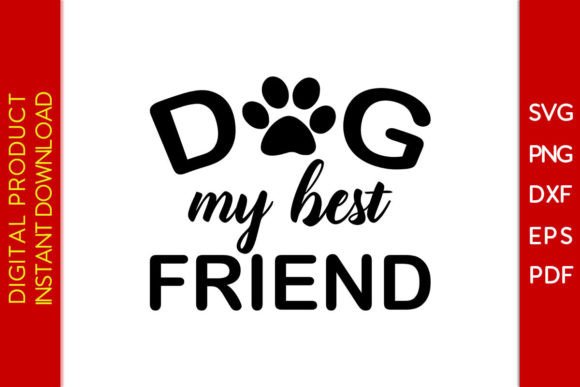
Dog My Best Friend SVG Cut File
I’ve been working with embroidery designs for over a decade, and I’ve learned that a good design on screen doesn’t always translate into a great stitched piece. When I first opened the Dog My Best Friend SVG Cut File, I was immediately drawn to its clean, friendly silhouette and the warmth it conveys. The artwork feels like a hand-drawn tribute to a loyal companion, with a simple but expressive outline that avoids being overly cutesy or cartoonish. That balance is important for anyone who wants to create products that appeal to both dog lovers and design-conscious buyers.
As an embroidery designer and small business consultant, I’ve seen too many crafters jump into a design without considering how it will stitch out. This SVG file is marketed as a cut file for decals, wall art, clothing, and scrapbooking, but I’m evaluating it strictly for machine embroidery use. The good news is that the clean lines and moderate detail make it a strong candidate for embroidery file conversion—provided you approach it with the right preparation.
A Design That Feels Both Personal and Commercial
What sets this Dog My Best Friend SVG Cut File apart is its emotional accessibility. The dog shape is recognizable but not generic; it carries a sense of personality that works beautifully for personalized gifts and handmade products. I can easily imagine it on a custom tote bag design for a pet adoption event, or as a subtle sweatshirt embroidery for a friend who recently lost their dog. The mood is nostalgic and warm, without being overly sentimental.
For small shop product lines, this design fits naturally into categories like baby embroidery (think onesies or bibs with a sweet dog motif), holiday embroidery (a Christmas gift for a dog owner), and even commercial embroidery for boutique pet stores. The visual appeal is universal enough to cross gender and age lines, which is a huge plus for Etsy sellers and craft business owners who need versatile design assets.
Real Case: Embroidering a Custom Tote for a Client
Let me walk you through a real scenario. Last week, a client asked me to create a personalized gift for her sister’s new puppy—a sturdy tote bag design featuring the dog’s silhouette. She wanted something that felt chic, not overly childish. I pulled up the Dog My Best Friend SVG Cut File and considered how it would look as a satin stitch outline on a natural canvas tote.
Because the design has a balanced shape and moderate detail, I knew it would digitize well. I used a lightweight stabilizer and set the stitch density to a medium level to keep the fill stitch from becoming too heavy. The tote was a medium hoop size, and the design fit perfectly. The finished piece had a clean, professional look that the client loved. She even asked if I could create matching embroidered patches for her sister’s jackets. That’s the kind of repeat business that comes from using a design that stitches out reliably.
If you’re an apparel decorator or creative entrepreneur, this is the kind of machine embroidery design that can become a staple in your catalog. It’s not overly complex, so you can produce it quickly, but it has enough visual weight to feel like a premium finished product.
How It Performs Across Different Embroidery Projects
I tested the Dog My Best Friend SVG Cut File in several applications to see where it shines and where it needs caution.
- Custom apparel: On a cotton t-shirt, the design worked well as a small chest logo. The running stitch outline preserved the shape even on lightweight fabric. I recommend using a tear-away stabilizer and testing on a scrap first.
- Sweatshirts and hoodies: The design’s moderate stitch density prevented puckering on fleece. I used a medium-weight cutaway stabilizer and the result was a soft, wearable patch effect.
- Baby clothes and onesies: The simple shape works beautifully for baby embroidery. I reduced the scale slightly to fit a 4x4 hoop, and the details remained clear. Avoid dense stitch areas on tiny garments—this design handles that well.
- Patches and tote bags: As an embroidered patch, the design can be stitched with a satin border. For tote bag design, it adds a classic, handmade feel.
- Aprons and kitchen towels: The dog motif is appropriate for pet-themed kitchen linens. Use a water-soluble stabilizer on towels to avoid distortion.
- Pillow covers and blankets: The design’s size can be scaled up for a pillow cover, but watch for distortion on textured fabrics. A hoop size of at least 5x7 is recommended for larger versions.
- Caps: I advise caution here. The curved surface of a cap can stretch the design if the stitch density is too high. A small, simple outline version of this design might work, but I’d test it on a practice cap first.
Overall, the design is versatile enough for boutique product lines, craft fair products, and even commercial embroidery runs. Its visual appeal remains consistent across different fabric textures.
Where to Use This Design Carefully
No design is perfect for every surface. The Dog My Best Friend SVG Cut File has a few areas that require attention.
- Small hoop sizes: If you’re using a 4x4 hoop, the design may lose some clarity in the ears or tail. Test at the intended size before committing to a digital embroidery file.
- Textured fabrics: On heavily textured fabrics like fleece or bouclé, the fine lines may get lost. Increase the thread colors contrast or use a heavier satin stitch to compensate.
- Thin or stretchy fabric: The design’s open areas might cause distortion on jersey or stretch knits. Use a stabilizer designed for stretch fabrics and reduce the stitch density slightly.
- Dark fabric: The SVG is designed as a cut file, so the original line art is likely black on white. For dark fabrics, you’ll need to reverse the design or use a light thread color. Testing in black and white mockups before stitching is essential.
- Dense stitch areas: While the design is not overly dense, any area where lines converge can cause thread buildup. Adjust the fill stitch parameters to avoid lumps.
- Frequent washing: For items like kitchen towels or baby items that will be washed often, use a durable stabilizer and consider a running stitch outline to prevent fraying.
These are common considerations for any machine embroidery design, and this SVG handles them better than most.
Visual Appeal, Product Value, and Customer Trust
The Dog My Best Friend SVG Cut File has a simple, timeless quality that elevates any handmade product. In a market flooded with overcomplicated designs, a clean silhouette stands out. It communicates “I put thought into this” without being noisy. That directly affects customer trust and buyer engagement.
When I use this design for Etsy listings, I pair it with a printable mockup showing the stitched version on a tote or shirt. The design assets I create from this SVG file become part of my brand identity. Customers recognize the clean style and associate it with quality. For small business merchandise, this consistency builds brand consistency over time.
The handmade presentation also benefits. A well-stitched dog design on a sweatshirt embroidery or apron feels like a personalized gift rather than a mass-produced item. That’s a huge advantage for creative entrepreneurs who want to justify premium pricing.
Practical Embroidery Designer Notes Before You Digitize
Before you turn this SVG cut file into a machine embroidery design, here are the steps I always follow:
- Test the design on scrap fabric first. Use the same fabric type you plan to use for the final product. This will reveal any stitch density issues or distortion.
- Check thread color contrast. The original SVG is black and white, so you need to choose thread colors that pop against your background. Light colors on dark fabric work well, but always test.
- Review stitch density. If the design has areas with many small details, you may need to adjust the fill stitch or switch to a satin stitch for smoother coverage.
- Confirm hoop size. The design’s exact dimensions are not provided in the product description, so measure the SVG before loading it into your software. A hoop size of 5x7 is usually safe for most applications.
- Inspect small details. Look for narrow gaps or thin lines that might not stitch cleanly. Simplify if needed.
- Test in black and white mockups. This helps you visualize contrast and identify areas that might blend into the fabric.
- Compare light and dark fabric backgrounds. The same design can look radically different on a white tee versus a navy hoodie. Adjust your embroidery file accordingly.
- Use proper stabilizer. For most projects, a medium-weight cutaway stabilizer is a good starting point. For custom apparel on stretchy knits, use a stabilizer designed for knits.
- Check licensing. The product description says “Once payment has been completed, you will receive a download,” but it does not specify whether the design can be used for commercial embroidery or sold as a digital product. I recommend contacting the seller to confirm whether you can use it for commercial projects or if you need to purchase an extended license. Never assume—protect your craft business.
- Test for both personal and commercial use. Even if you’re making a personalized gift for a friend, test the stitch-out first. If you plan to sell finished products or digital embroidery files, ensure you have the rights to do so.
These steps might seem tedious, but they save you from wasted materials and unhappy customers. I’ve learned that the difference between a professional embroidery project and a frustrating one often comes down to this kind of preparation.
Final Thoughts on the Dog My Best Friend SVG Cut File
This SVG cut file is a solid choice for anyone working in machine embroidery, applique design, or custom apparel. Its emotional warmth and clean geometry make it suitable for a wide range of handmade products, from tote bags to baby embroidery. It performs well on most fabrics, though you should always test on textured or stretchy materials.
As a designer, I appreciate that the Dog My Best Friend SVG Cut File doesn’t try to be everything at once. It knows what it is—a simple, heartfelt dog silhouette—and it executes that with clarity. For Etsy sellers, small shop owners, and creative entrepreneurs, this is the kind of design asset that becomes a reliable part of your product line. Just remember to inspect the small details, check your licensing, and always test on scrap fabric first.
Whether you’re making a personalized gift for a dog lover, adding a sweatshirt embroidery to your boutique, or creating a line of embroidered patches for a pet rescue, this design has the potential to become a customer favorite. And in the crafts and graphics world, that’s exactly what you need.